

Bali · Live
Living in Bali: real cost of living, areas and daily life in 2026
An honest guide to living in Bali as a European: real cost of living from €700/month, the best areas for your profile, housing, healthcare, transport and community. No postcards — verifiable 2026 data.
Living in Bali has gone from a backpacker’s dream to a considered decision for thousands of Europeans: retirees stretching their pension, professionals working remotely, families seeking a different pace. Behind the postcard lies a very concrete daily reality — how much it costs, where to settle, what day-to-day life is like — and this guide tells it without romanticism, with verifiable 2026 data.
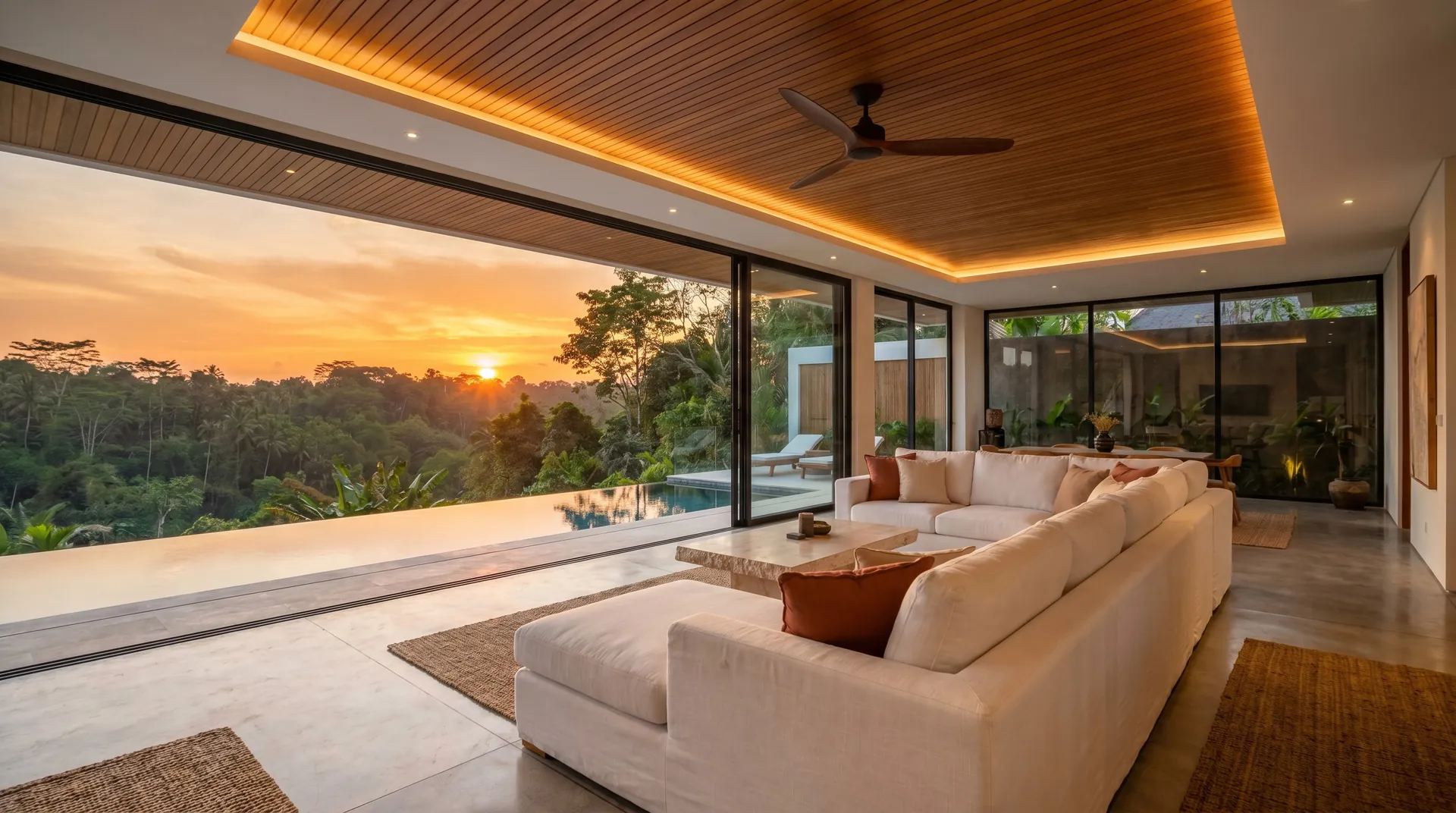
Living in Bali: the reality behind the postcard
Bali offers something rare: a stable tropical climate, a low cost of living, private healthcare of international standard, an established expat community and a deeply hospitable culture. It is not an improvised destination. Dutch, Germans, British and French have been settling here for decades, and in recent years a growing wave of Spaniards and Italians has followed.
What almost no one mentions is that the difference lies not only in the price, but in what that money buys. In Europe, a pension or an average salary goes on simply getting by. In Bali, the same amount pays for a house with a pool and garden, fresh food daily, domestic help and private transport. It is not about living with less: it is about living better while paying less.
Honesty is also in order: Bali is not perfect. Traffic in the fashionable areas is heavy, Indonesian bureaucracy demands patience, the rainy season (November–March) is intense, and the highest-complexity healthcare is still in Singapore, a flight away. This guide does not hide those rough edges; it puts them on the table so you can decide with clear judgement.
How much it costs to live in Bali: your real 2026 budget
This is where most information online falls short: figures without context, pre-pandemic data, or numbers tailored to a 25-year-old nomad sleeping in hostels. We give you the three real brackets for 2026, built from the concrete budgets of European residents.
| Item | Local (€700) | Comfortable (€1,200) | Premium (€2,000+) |
|---|---|---|---|
| Rent | Local room or house — €180 | 1-bed villa with shared pool — €450 | Private villa with own pool — €900 |
| Food | Local warungs (€3/meal) — €150 | Mix of warungs + expat cafés — €280 | Restaurants and premium supermarket — €450 |
| Transport | Rented or owned scooter — €50 | Scooter + occasional Grab — €90 | Car with driver or own vehicle — €280 |
| Healthcare and insurance | Basic insurance — €60 | Mid-range international insurance — €130 | Premium insurance with repatriation — €220 |
| Utilities (power, water, internet) | €55 | €85 | €110 |
| Leisure and community | Limited — €50 | Yoga, dinners, sport — €120 | Spa, club, domestic travel — €250 |
| Domestic help | Not included | Weekly cleaning — €50 | Full-time helper — €200 |
Those figures are real, not from a catalogue. The usual path is to start in the “comfortable” range during the settling-in period and, once you know the terrain, to slide toward “local” without giving up almost anything — or to move up to “premium” with little effort if your finances allow.
The areas of Bali: where to live according to your profile
Bali is not a single place, but half a dozen distinct worlds on an island the size of a small province. Choosing the right area is the decision that most shapes your daily life.
Sanur — East coast, calm sea with no waves, a seafront promenade and a residential atmosphere. A mature, mostly European expat community, hospitals nearby, international supermarkets and safe walkable streets. Probably the most recommendable area for those who value quiet and services close at hand.
Ubud — The island’s cultural heart, between jungle and rice paddies. A large and very active expat community: yoga, meditation, volunteering, talks, food of every level. The centre has heavy traffic, but the nearby villages (Penestanan, Pengosekan) are oases of calm. A slightly cooler climate thanks to the altitude.
Canggu, Pererenan and Cemagi — The epicentre of the young, digital and social profile: specialty cafés, coworking spaces, surf and nightlife. In return, heavy traffic at rush hour and rising prices. Good for those seeking movement; exhausting for those seeking stillness.
Bukit (Uluwatu, Bingin) — Cliffs, serious surf and nature. Fewer services and more driving, but houses with spectacular ocean views. For independent profiles who prioritise landscape and disconnection.
Tabanan — The least known and most authentic option. An hour and a half from the airport, with black volcanic-sand beaches, quality surf and a very small community of surfers, yogis and expats who flee the bustle. It is, in many ways, the Bali of the seventies: the one that existed before mass development. It is the area where our villas are located. And, unlike “the seventies thing” that was left behind, this coast has a future: infrastructure is underway that will bring it closer and raise its value.
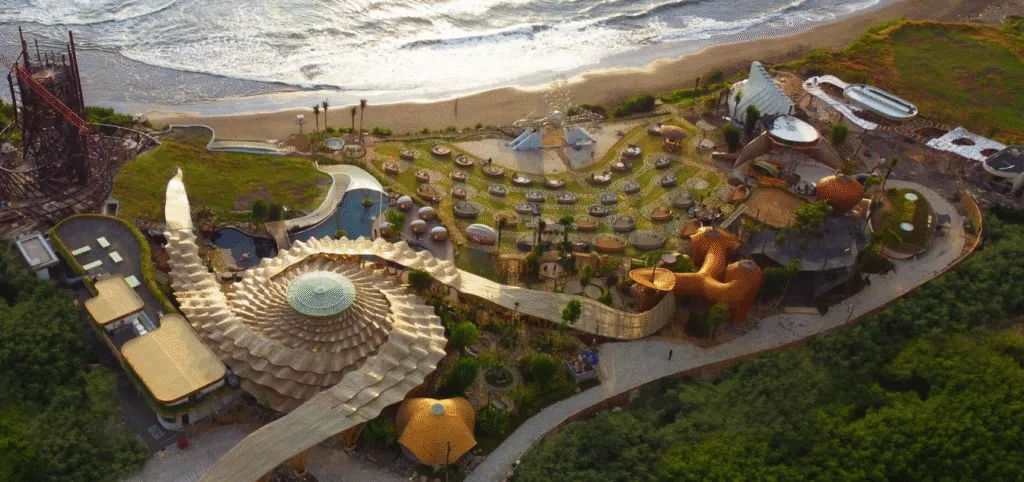
A coast that has yet to take off

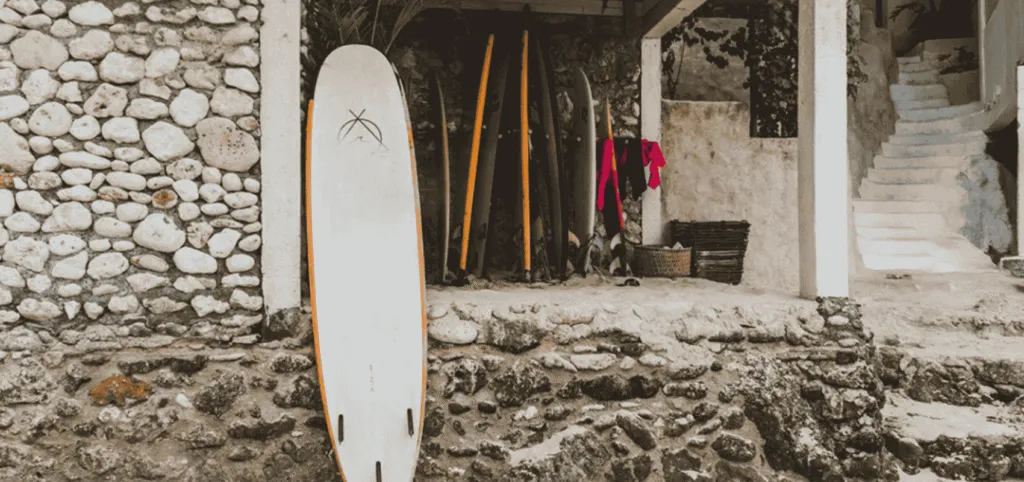

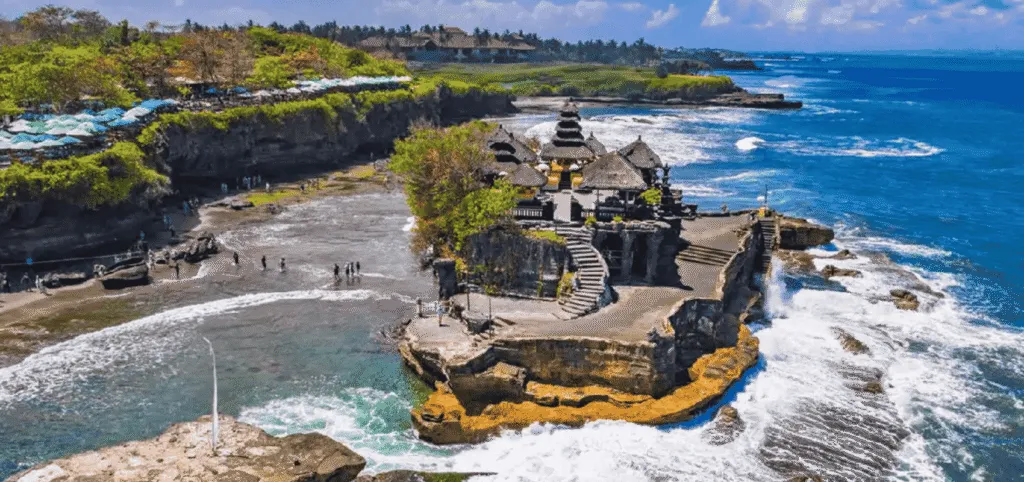
A step away from the best of the coast
Tabanan is roughly an hour’s drive from the area’s main attractions.


Housing: rent or buy
Most people start by renting, and that is the sensible thing for the first year: it lets you try out areas, understand prices and avoid committing capital before you know the terrain.
Renting. A 1–2 bedroom villa with a pool costs between €600 and €1,200/month on an annual contract, depending on area and type. Long contracts (annual or biennial) are usually paid in advance and are notably cheaper than monthly holiday rentals. Negotiating face to face, with a clear contract and, preferably, local advice, avoids most problems.
Buying. If your horizon exceeds two or three years, buying starts to make economic sense. A new-build villa with a pool starts from €59,000, against the €700–1,200/month you would pay in rent. As a foreigner you cannot access full ownership (Hak Milik), but you can use leasehold (Hak Sewa, a 25–30 year, extendable right of use) or corporate structures (PT PMA). This is terrain where legal advice is not optional.
Daily life: transport, shopping and food
Transport. Almost everyone gets around by scooter: €50/month to rent, €1,000–1,500 to buy. It is cheap, nimble and solves daily life. For those who do not see themselves on two wheels, Grab and Gojek (the local equivalent of Uber) offer a car with driver at trivial prices: a ride from Sanur to Ubud is around €5. For long stays, hiring a trusted driver by the day is a very affordable convenience.
Shopping. For imported and European products: chains like Pepito, Grocer & Grind or delivery services such as Bali Direct. For fresh, cheap everyday produce, the traditional markets (pasar) offer fruit, vegetables and fish at a fraction of the supermarket price.
Food. It is one of the great pleasures of living here. From the neighbourhood warung at €2–3 to signature cuisine at European prices, by way of a vegetarian and healthy scene that is hard to match. Fresh tropical fruit and fish are everyday and cheap.
Climate and seasons. Two seasons: dry (April–October), ideal, and rainy (November–March), with intense but brief downpours. It is never cold. This is worth bearing in mind when planning the move and choosing a home (ventilation, orientation, drainage).
Healthcare: what to expect as a resident
Healthcare is the number-one concern of any European considering living far from home, and the answer in Bali is reassuring for everyday matters: there is private infrastructure of international quality, above all in Denpasar, Kuta, Nusa Dua and Ubud, with care in English and 24-hour emergency services (BIMC, Siloam, Kasih Ibu, among others).
For the truly complex — major surgery, oncology — many residents fly to Singapore, an hour and a half away, with world-class healthcare. That is why international insurance with evacuation or repatriation cover is not a luxury but the sensible choice. Indonesian public healthcare (BPJS) is accessible to residents with a KITAS after a waiting period, but its cover for foreigners is basic; the standard among Europeans is private insurance, which runs around €50–200/month depending on age and cover.
The bureaucratic side: visa and residence
None of the above is stable without the right visa. A tourist visa does not allow continuous residence or work; to live in Bali you need a KITAS suited to your situation — retirement, investment, work or spouse of a resident — and the correct choice shapes the entire move. It is best resolved before you travel, not as you go.
If your main motivation is retirement, we have a specific guide with the visa, budget and healthcare tailored to that profile: retiring in Bali.